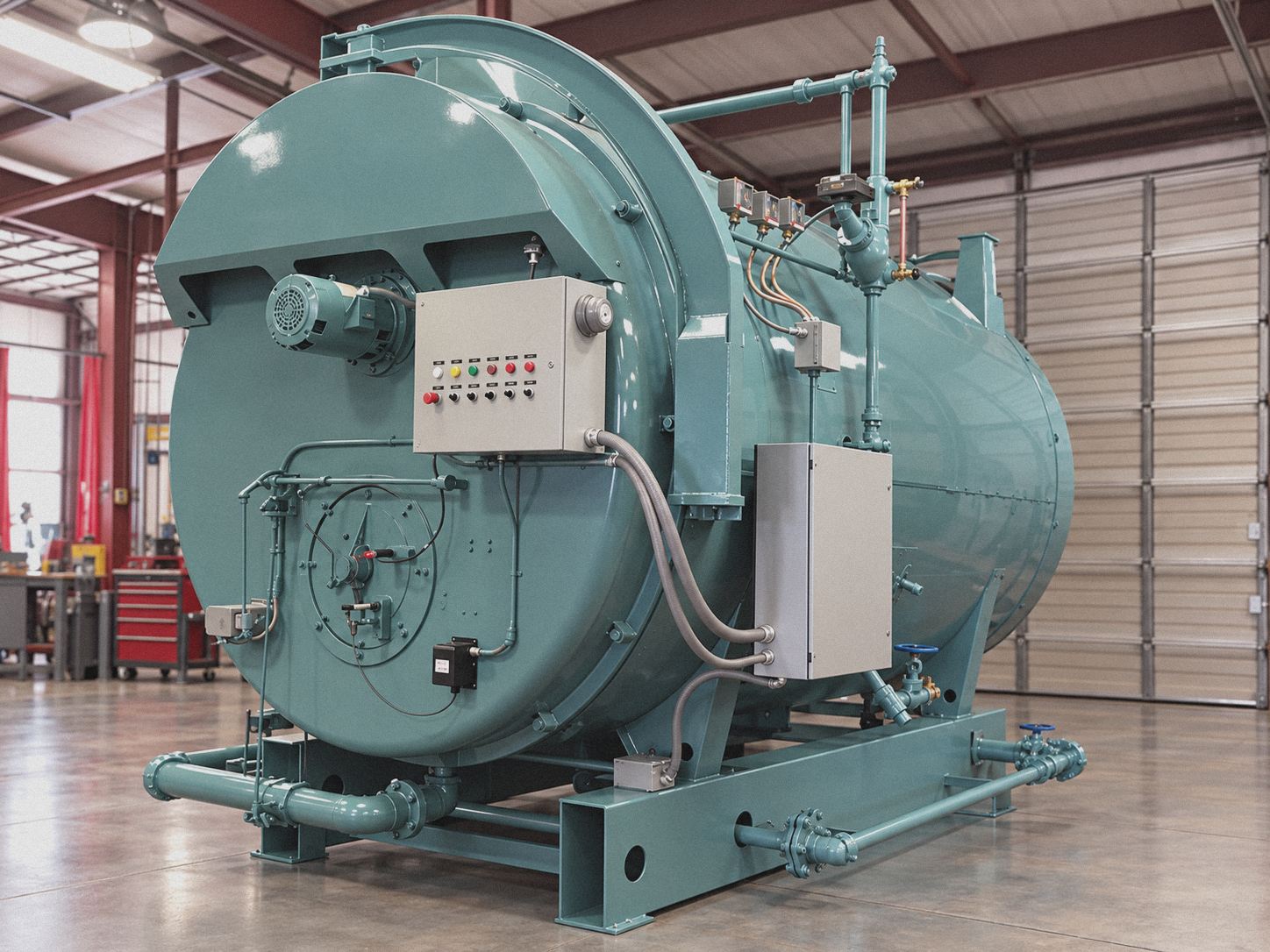
In many boiler rooms the feedwater tank is the most overlooked piece of equipment, yet its temperature decides how much oxygen reaches the boiler, and how hard the treatment chemistry has to work.
Why a Little Oxygen Does a Lot of Damage
Dissolved oxygen attacks steel in small, concentrated spots called pits. Because the attack is so localised, a tube or line can perforate even though very little metal has been lost overall. Oxygen that isn't removed before the boiler damages feedwater lines, pumps and economisers, then leaves with the steam and corrodes the condensate return network.
Heat First: The Mechanical Step
Water holds less dissolved gas as it gets hotter. At room temperature, make-up water is close to saturated with oxygen; heating it drives the oxygen out of solution so it can escape through the tank vent. As a rough guide, oxygen solubility halves between about 20 °C and 60 °C, and keeps falling as the water approaches boiling.
- Atmospheric feedwater tank (hot well): keep it hot, typically at least around 82 °C. Above roughly 93 °C, pumping becomes difficult because the water is close to boiling and feed pumps can cavitate.
- Deaerator: a pressurised deaerator heats the water above 100 °C and strips oxygen much more completely than an open tank. Where steam demand justifies it, it is the better first line of defence.
- Vent: the tank vent must be open and working; oxygen driven out of the water has to leave the tank.
- Condensate return: hot condensate raises the feedwater temperature and reduces the volume of oxygen-rich make-up water. Returning more condensate helps on both counts.
Chemistry Finishes the Job, It Doesn't Replace Heating
Even a well-run hot well leaves some oxygen behind. A chemical oxygen scavenger removes the remainder. Two points matter:
- Demand follows oxygen. The more oxygen in the feedwater, the more scavenger is consumed. A cold tank means higher chemical consumption and a higher risk of running out of residual.
- Scavengers are slow when water is cool. Below about 65 °C, even catalysed scavengers react slowly, so oxygen can reach the boiler before it is removed.
Chemical treatment is designed to work with mechanical deaeration, not instead of it.
What to Check on Site
- Feedwater tank temperature: logged daily, ideally on a gauge the operators actually see.
- Vent: a light plume of vapour from the vent shows gases are escaping.
- Steam supply to the tank: control valve and sparge working correctly.
- Condensate return: percentage returned, and any lines that have been dumped to drain.
- Water analysis: oxygen scavenger residual in the boiler water, and signs of iron pick-up in the condensate.
- Inspection findings: pitting on tube surfaces or in the feedwater lines during annual inspection.
How PWR Helps
We review feedwater temperature, deaeration and condensate return as part of every boiler program, then set the chemical treatment around the conditions we find, so the chemistry supports a sound mechanical setup instead of compensating for one.