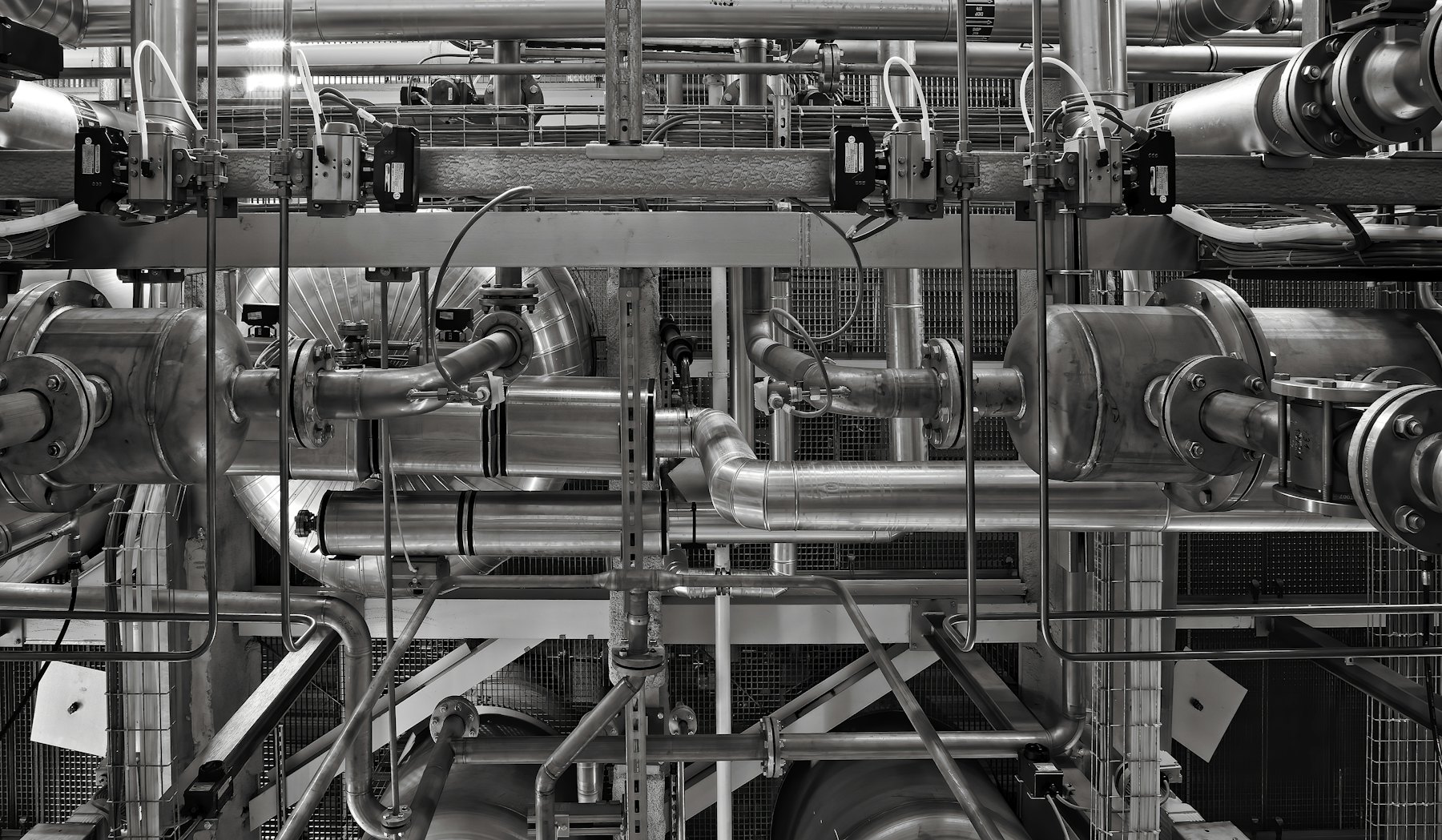
Chilled-water and heating circuits are called "closed", so they're often left alone once commissioned. Years later, blocked fan-coil units, failed valves and pinhole leaks tell a different story.
Oxygen Keeps Finding a Way In
Every top-up with fresh water adds dissolved oxygen. So do leaks, automatic air vents, open or poorly maintained expansion tanks, and pumps that draw in air. Oxygen drives corrosion of steel and the iron oxide that ends up in strainers and coils.
Make-Up Is the Warning Light
A truly closed system needs very little make-up water. If the meter keeps turning, there's a leak, and each litre that goes in dilutes the inhibitor and brings more oxygen. Fitting and reading a make-up water meter is one of the cheapest checks you can do.
Bacteria Are Part of the Chemistry
Closed loops are warm or mildly cool, dark and still in places: ideal for bacteria. Some consume treatment chemicals; others, such as sulphate-reducing bacteria, cause aggressive corrosion under deposits.
Mixed Metals
Steel pipework, copper coils, brass valves and sometimes aluminium in the same circuit can set up galvanic corrosion. The inhibitor program has to protect all of them, not just steel.
New Systems Start Dirty
Mill scale, welding debris, oil and construction dirt left in new pipework become the starting point for corrosion and blockages. That's why pre-commission flushing, chemical cleaning and passivation matter, followed straight away by a protective treatment.
What to Watch
- Inhibitor level against the program's target range
- Make-up water volume over time
- Dissolved iron and copper as signs of active corrosion
- pH and conductivity
- Bacteria counts
- Appearance and condition of strainers and filters